MARIANNE MOE, IRENE NORDLI, LENE TANGEN
Vibrations
7 May - 28 June 2026


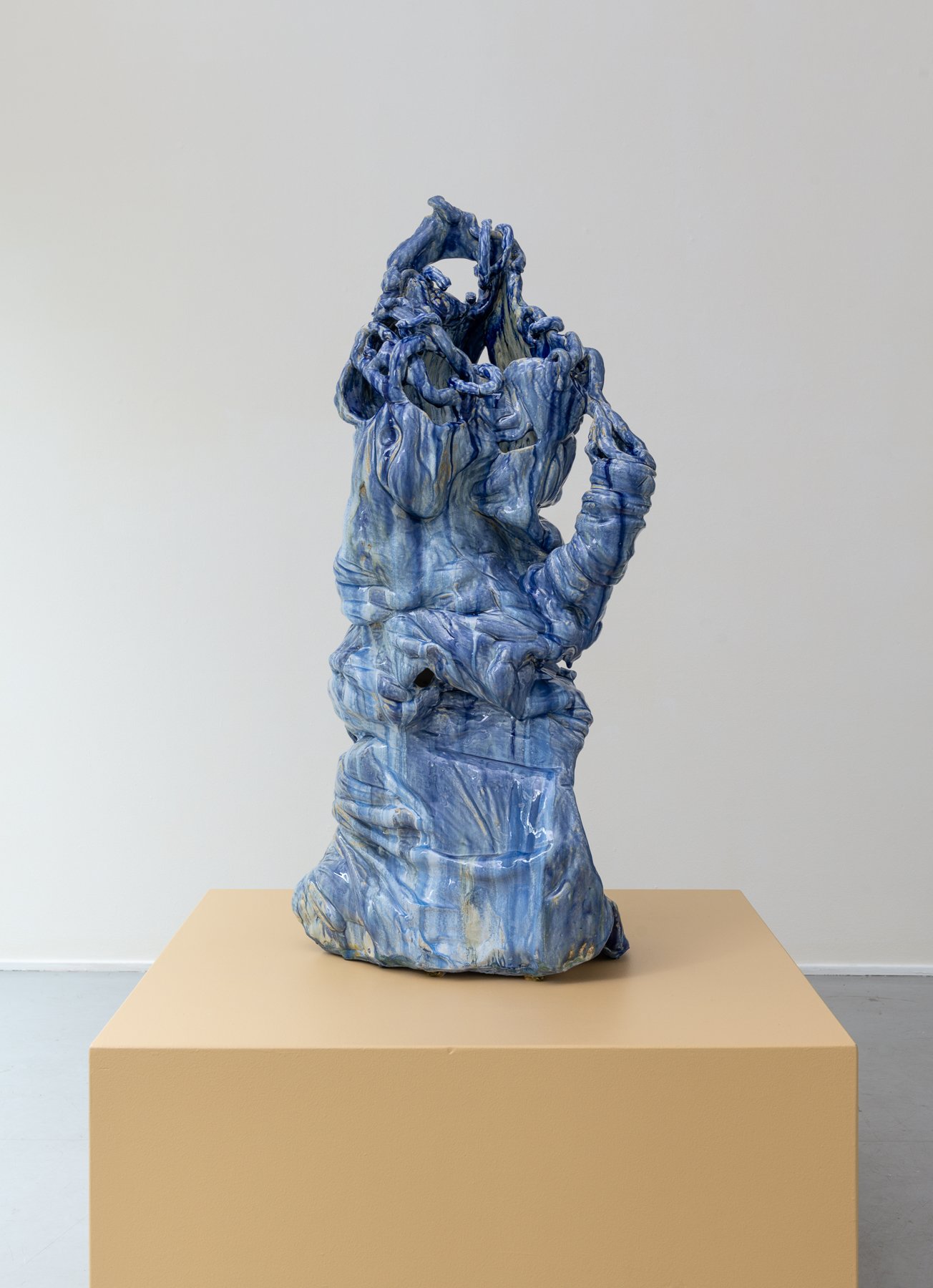
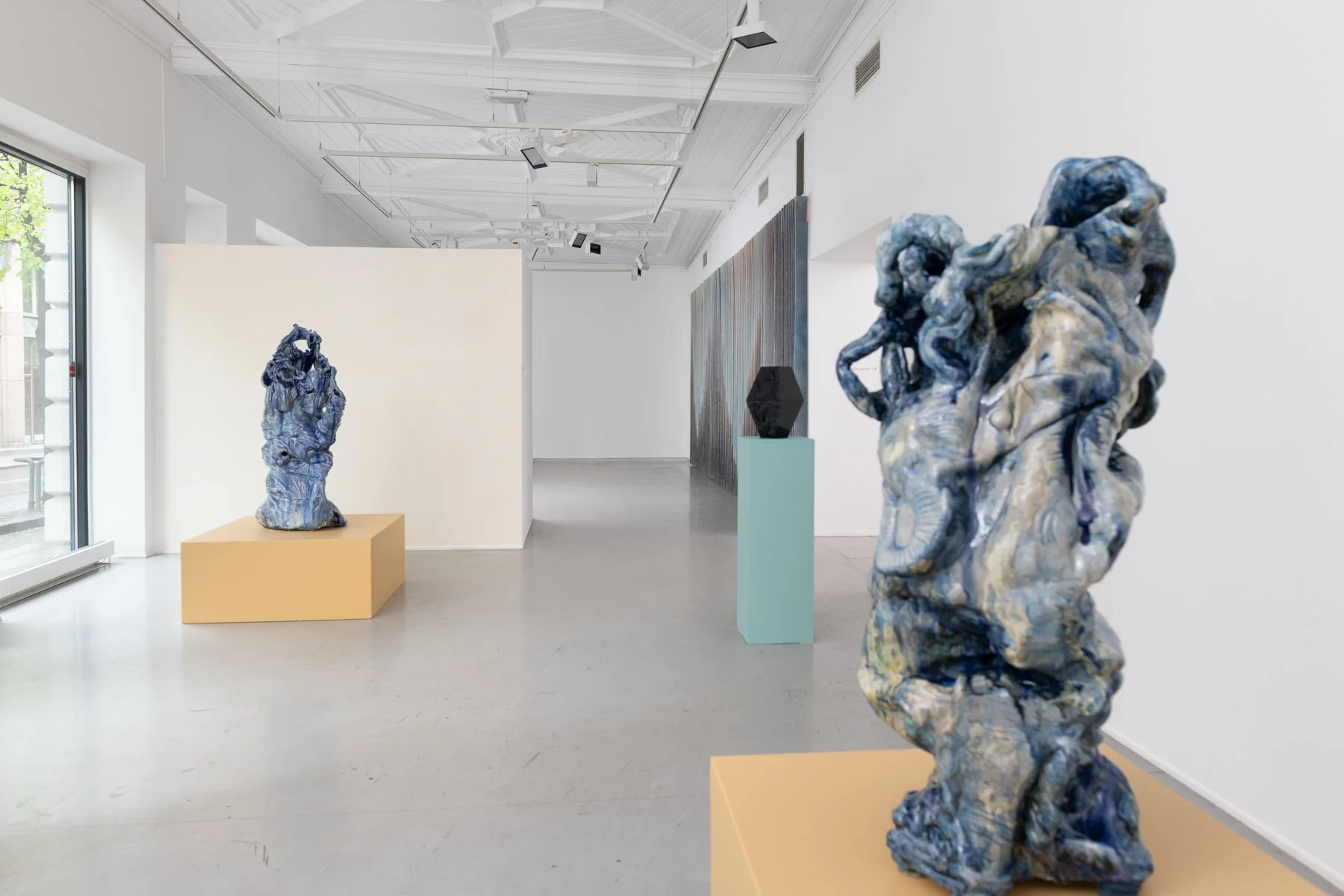


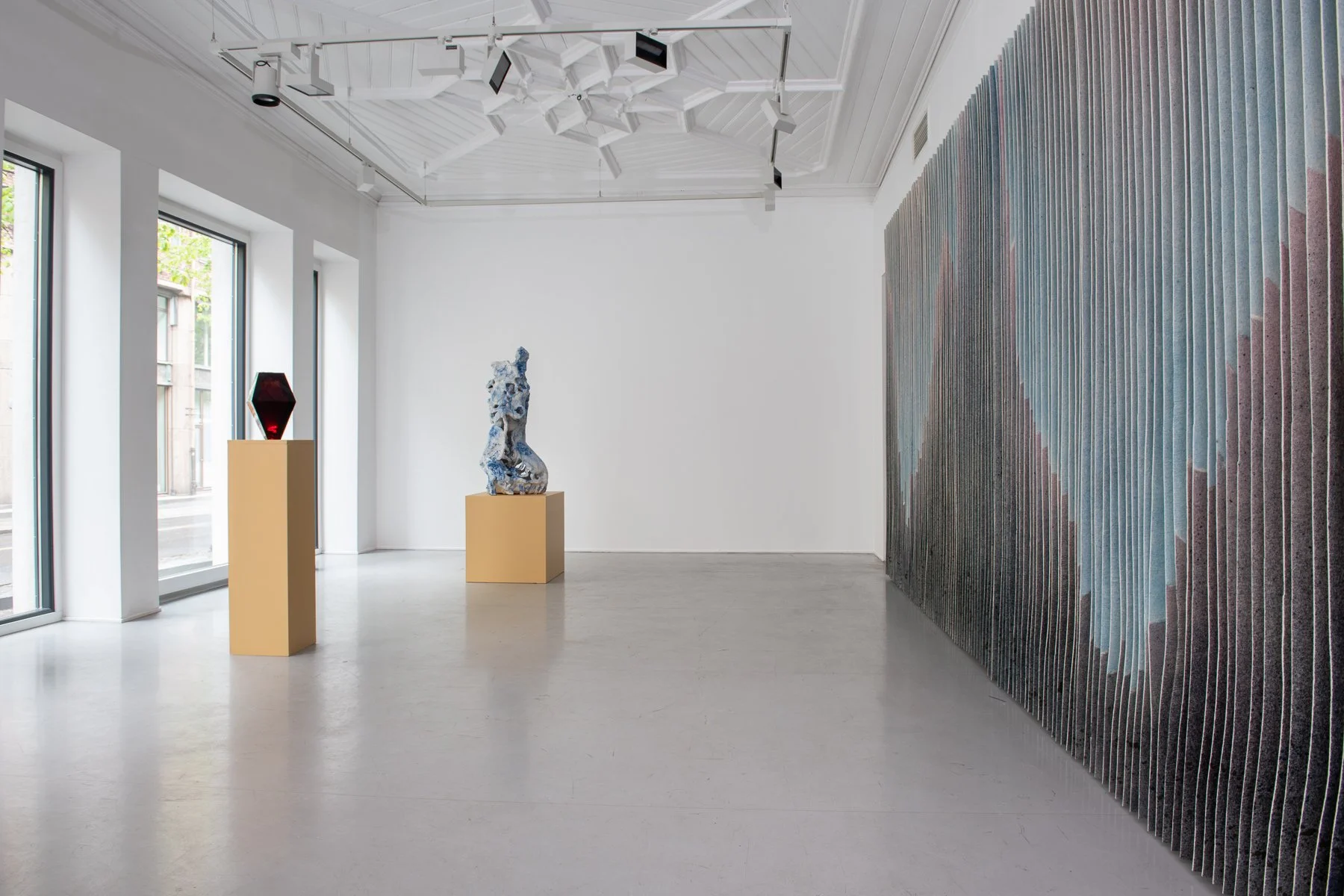


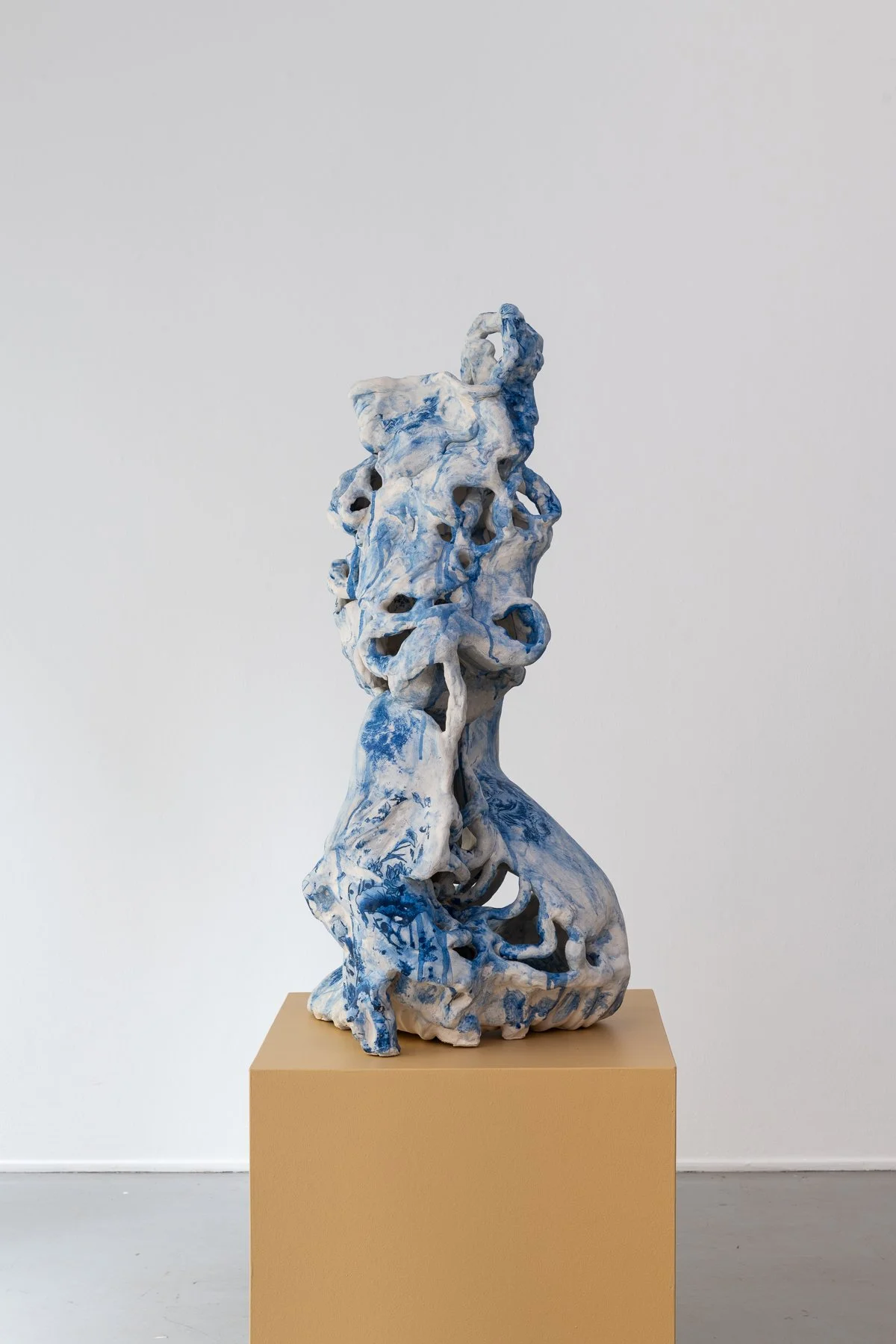
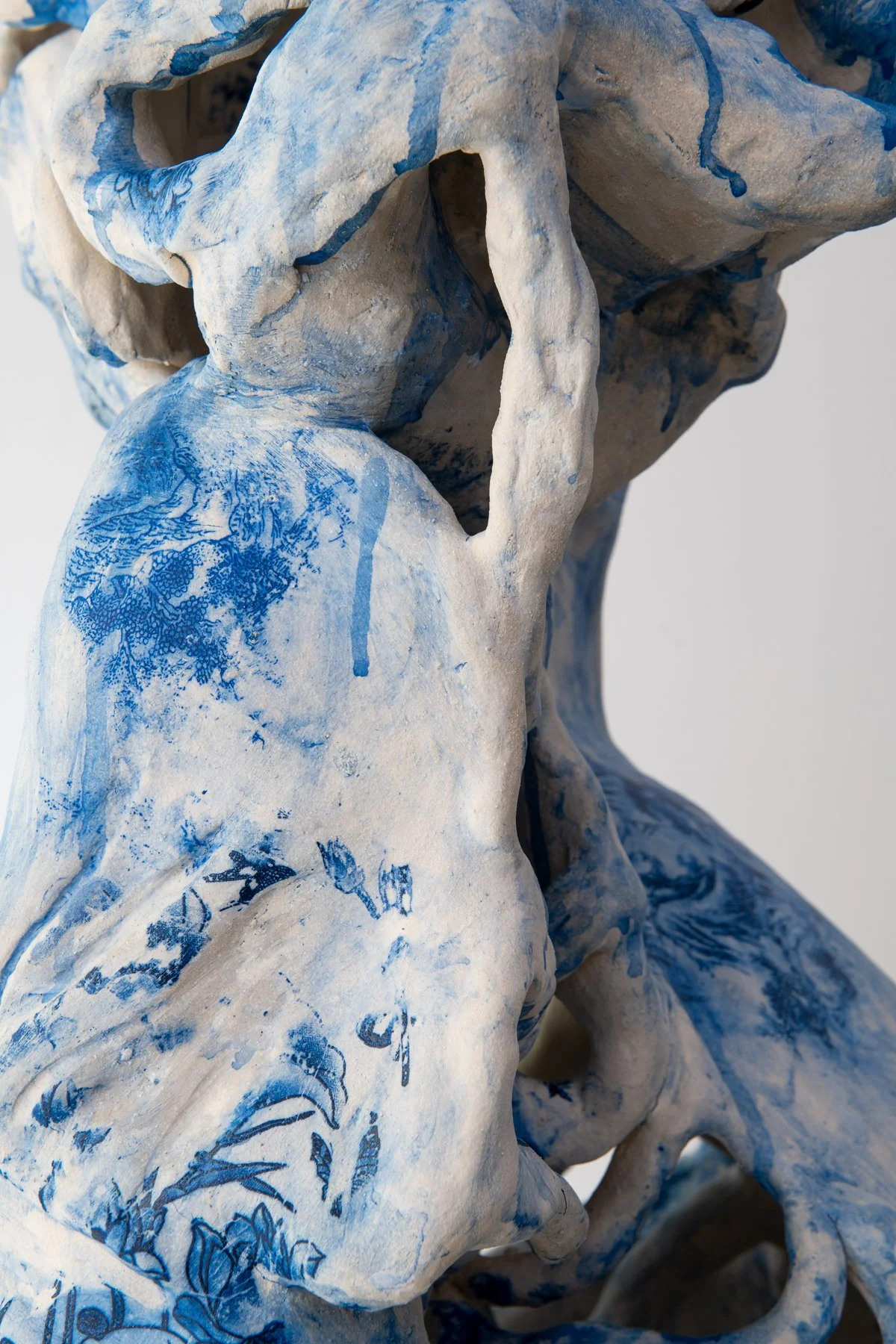

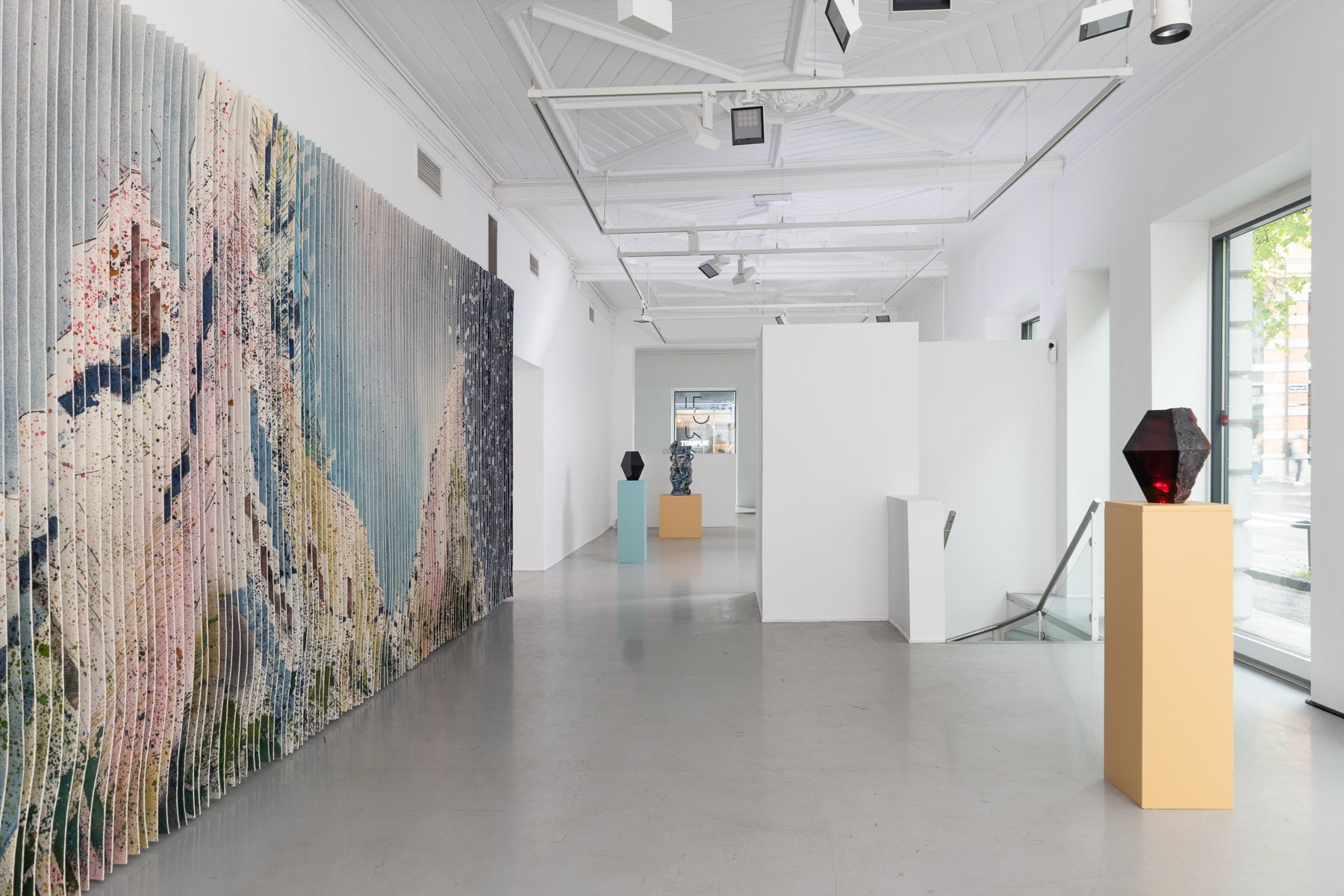


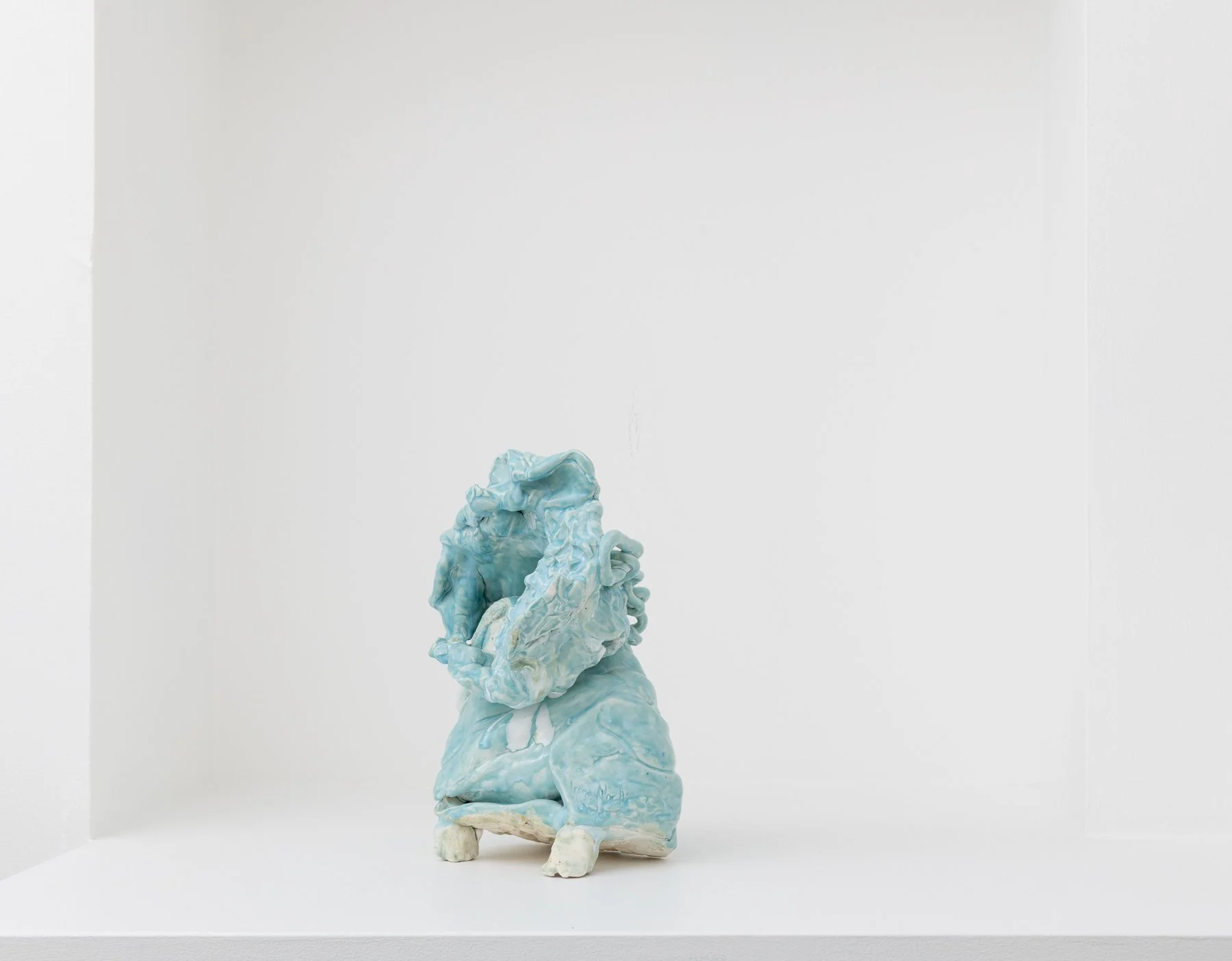


Three artists, three materials - ceramics, glass, and textile - and a shared approach to the living and the transformative. Marianne Moe, Irene Nordli and Lene Tangen are all deeply rooted in their materials, and in the meeting between hand, fire and process, their works emerge. To find the body in a vessel, to capture an arctic ice waste in glass, to shape one’s own mountain in textile. this is how the three artists approach nature, each in their own way. What unites them is how the works come to life: through an organic, listening approach where the material is an active collaborator.
Marianne Moe (b. 1975 in Herøy, Helgeland) lives and works in Bergen. She holds a postgraduate degree in textile art from the Bergen Academy of Art and Design (2002). Moe’s practice is firmly rooted in the textile field, and she primarily works with felted wool in various qualities. She is particularly known for large-scale, monumental works with a strong material and spatial presence, often referencing landscape and nature. Moe has participated in numerous juried exhibitions and was awarded the Finn Erik Alsos Memorial Prize at the Norwegian Association for Arts and Crafts Annual Exhibition in 2025. Her works are held in collections including the National Museum of Norway, the City of Oslo Art Collection and KODE Art Museums and Composer Homes. She also works extensively with public art, most recently completing a major commission for Tønsberg District Court in 2025.
Moe works with felted wool. Her starting point is concrete mountains and landscape formations, yet she does not seek to recreate a specific place; rather, it is her own nature that she transfers into the soft material. Color is dripped, brushed, and sprayed onto the felted wool, and landscapes emerge as memories and sensations. Finally, the fabric is cut into strips and assembled like a vertical blind. The work is ambiguous and dual, it must be viewed from multiple angles to fully reveal itself.
Irene Nordli (b. 1967, Oslo) lives and works in Oslo and Heestrand in Sweden. She is educated at the National Collage of Art and Design, in Bergen (1995) and was a professor at the Oslo Academy of the Arts, Department of Arts and Crafts until 2019. She has exhibited widely both in Norway and internationally. Her works have been acquired by Sørlandets Kunstmuseum, Nordenfjeldske Kunstindustrimuseum Trondheim, Nasjonalmuseet Oslo and KODE Bergen, Eskilstuna Art Museum and Hamburg Museum für Kunst und Gewerbe Germany, among others.
Nordli takes the vessel or container as her point of origin, seeking to enter the core of ceramics. The vessels are built up from fragments of more or less recognizable elements. She allows the sculptural vessels to grow into bodies that move, and that move you. Her physical imprint is present in the works. For this exhibition, the works appear more like skeletons, bearing traces of decoration and ornament.
Lene Tangen (b. 1971, Lørenskog) has a studio at Blaker Skanse in Lillestrøm. She was educated at KADK – The Royal Danish Academy of Fine Arts in 2011. Tangen has had a number of solo exhibitions and participated in group exhibitions nationally and internationally. Her works have been shown at The European Museum for Contemporary Glass, Modern Masters and the Glass Art Society in Germany, at the New Bedford Art Museum in the USA, at the National Art Museum of China in connection with the Beijing International Art Biennale, the Annual Exhibition of NK at the National Museum, as well as at international fairs such as SOFA Chicago and Collect London through FORMAT and Vessel Gallery. Tangen's sculptures have been purchased by, among others, the National Museum, KODE, Svalbard Museum, Nordenfjeldske Kunstindustrimuseum and the European Museum of Modern Glass. She is a recipient of the Norwegian Government's 10-year artist grant.
Tangen works with cast and cold-worked glass, allowing the material’s own processes to play a decisive role in the content of the works. The geometric, strictly polished forms reveal themselves to be the opposite upon closer inspection, when you look into the glass. Inside, there is an entirely different world, inspired by the Arctic environment. The essence of these contrasts lies in freezing a transformation, like impressions of ice formations, and giving it stillness.
The exhibition is supported by Arts and Culture Norway